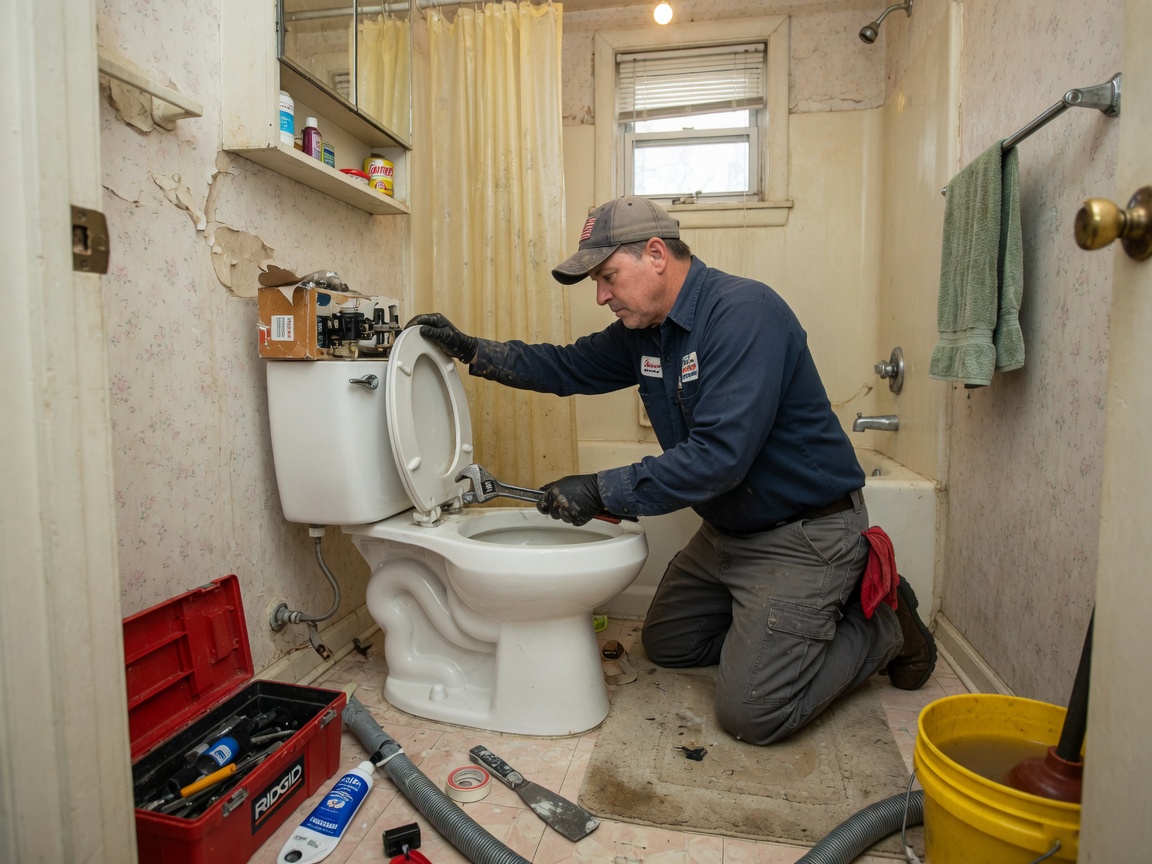
Older homes in East Norristown and Hancock often have cast-iron soil stacks and galvanized supply lines that corrode over decades, making toilet leaks harder to trace than in newer builds. A failed wax ring or cracked flange can send water under the subfloor, especially when humid subtropical summers drive condensation along cold pipes. We check the closet bend and vent stack connections before any repair because Montgomery County codes require proper venting to prevent sewer gas issues after the work is finished.
In West Norristown near the Schuylkill River Trail, seasonal temperature swings and occasional high water tables can shift foundations slightly, loosening toilet bolts and creating slow leaks that homeowners notice only when the floor starts to soften. We carry both standard and offset flanges on the truck because many 1920s–1950s homes here have non-standard rough-ins. Replacing just the flapper or fill valve rarely solves the problem when the tank-to-bowl gasket has hardened from years of hot, humid summers.
Elmwood Park homes close to the zoo frequently sit on clay-heavy soil that holds moisture, increasing the chance that a leaking toilet will rot the subfloor before the issue is noticed. We always pull the toilet to inspect the flange and ring rather than guessing from above, and we recommend replacing the supply line at the same time because the original rubber washers crack in the heat. This approach prevents repeat visits during peak summer demand when calls from Pottstown and Philadelphia suburbs increase.
Technician insight
In Norristown the thing that catches most people out with Toilet Repair is the clay soil around Elmwood Park and Hancock that keeps moisture against the subfloor long after a wax ring fails, so homeowners think the leak is fixed when it is only hidden until the next humid summer.
Slow Leak In West Norristown
Homeowner noticed soft flooring near the toilet after a hot stretch. We pulled the fixture and found a deteriorated wax ring on a slightly offset flange typical of 1940s homes. Replaced the ring, bolts, and supply line, then reset the toilet and confirmed no moisture remained under the floor.
Toilet Repair Services We Offer
✓Running Toilet Repair
Diagnose and fix continuous running caused by fill valve, flapper, or flush valve problems common in older Norristown tanks.
✓Toilet Leak Detection
Locate hidden leaks at the wax ring, supply line, or tank bolts before water damages floors in East Norristown and Hancock homes.
✓Flush Valve Replacement
Replace worn flush valves and seals that no longer hold water in homes built before modern low-flow standards.
✓Wax Ring and Flange Repair
Remove the toilet, inspect the flange, and install a new wax ring to stop leaks at the floor connection in older Montgomery County properties.
✓Tank to Bowl Gasket Service
Replace hardened gaskets between tank and bowl that cause slow leaks inside the base of toilets in humid Norristown summers.
Toilet Repair Cost in Norristown, PA
| Service | Typical Range | What Affects It |
|---|---|---|
| Running Toilet Repair | $150–$350 | Higher when tank must be removed in tight 1920s bathrooms |
| Toilet Leak Detection And Wax Ring | $275–$475 | Includes flange inspection common in Elmwood Park homes |
| Full Toilet Replacement | $450–$750 | Varies with rough-in and access in West Norristown |
Ranges are typical for Norristown, PA and confirmed with an exact written quote before any work starts.
How it works
- 1
Initial Inspection
Check the supply line, tank components, and floor around the base for moisture in the specific home layout.
- 2
Diagnosis
Pull the toilet only when needed to examine the flange, ring, and soil stack connection.
- 3
Repair Or Replacement
Install correct parts for the age of the fixture and rough-in found in Norristown housing stock.
- 4
Test And Cleanup
Run multiple flushes, check for leaks, and restore the area before leaving the job.
Pricing
Most toilet repairs in Norristown fall into a mid-range because older homes often require pulling the fixture for a lasting fix.